

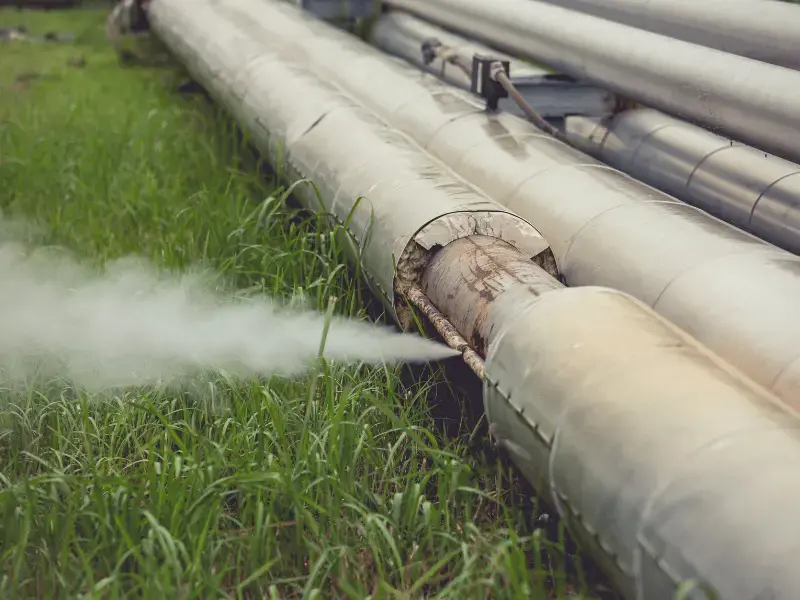






Quick Answer: To identify corrosion in gas pipelines before leaks start, watch for rotten egg smell (from mercaptan), sulfur odor near the gas meter, hissing sound or whistling noise, and visible rust with discoloration or flaking metal on any exposed pipe. Outdoors, look for dead vegetation, brown grass patches, wilting plants, or bubbling water in puddles where a buried line runs, because gas can cause oxygen displacement in soil. If you notice a weak flame, yellow/orange flame instead of a blue flame, slow heating, or pilot light failures, treat it as a warning and prioritize safety first.
What “Corrosion in Gas Pipelines” Looks Like (Simple Explanation)
Corrosion in gas pipelines is the gradual breakdown of pipe material—most often metal caused by moisture, chemistry, or electrical effects. Over time, metal breakdown reduces thickness, weakens the wall, and creates pinholes that can become gas line leaks. Corrosion often begins at joints and fittings (connections), then spreads along the line, especially where protective coatings have failed.
A key point: corrosion isn’t always dramatic. It can show up first as powdery residue, faint staining, or small changes in flame quality long before a pipe ruptures.
Early Warning Signs You Can Spot Without Tools
The fastest way to catch corrosion in gas pipelines early is to recognize patterns: smell + sound + visual + performance + yard clues.
Smell Warnings (Odor Is a Big Deal)
Natural gas is odorized with mercaptan, which creates a rotten egg smell. If you detect a sulfur odor, especially gas odor near appliances or gas odor near a gas meter, assume a leak is possible.
Tip: Odor can drift. If you smell it in one room, check whether it’s strongest near a stove, furnace, or water heater then stop “checking” and start “acting safely” (steps below).
Sound Warnings (Pressure Makes Noise)
Gas escaping under pressure may create a hissing sound or whistling noise, especially at connectors, valves, and elbows.
If the sound seems to come from a connection point, that’s often where corrosion concentrates again, joints and fittings are common starting points.
Visual Warnings on Exposed Pipe
If you can safely see a segment (near a meter or appliance connection), look for:
- visible rust
- brown/orange patches
- discoloration
- green or bluish marks
- flaking metal or peeling metal
- cracks on pipe surface
- powdery residue
- orange, brown, or green patches that keep expanding month to month
These are classic surface indicators that the pipe’s protective layer is failing and the metal is reacting to air/moisture/chemistry.
Many of these are the same warning signs of gas Line deterioration that show up before a measurable leak.
Safety First-What to Do If You Suspect a Leak (Do This Before Any “Inspection”)
If there’s strong odor, loud hissing, or anyone feels unwell, do safety steps first.
Immediate Safety Steps
- Leave the area and get to fresh air (do not “investigate” inside).
- Avoid ignition sources: do not use switches, lighters, or anything that can spark.
- If safe to access outside, shut off the main gas valve at the meter.
- Call your gas utility or emergency services from outside.
- Do not attempt DIY sealing, tightening, or testing.
Quick fix (safe + practical): If the odor is faint and you suspect it’s only around a single appliance connection, you can ventilate by opening doors/windows while you leave but do not turn on fans, and do not use electronics in the suspected area.
How to Inspect Exposed Gas Piping Without Touching Anything Risky
You can do a visual-only check of exposed pipe sections. The goal is not to “confirm a leak,” but to identify conditions associated with corrosion in gas pipelines and decide whether to call for professional diagnostics.
Where to Look (Common Locations)
- Near the gas meter and shutoff valve
- Appliance connectors (stove, furnace, water heater)
- Basement/crawl space runs where humidity (crawl space/basement) and condensation can collect
- Outdoor wall penetrations where wind-driven rain or sprinklers can add moisture exposure
Tip: Use a flashlight and your eyes, nothing else. Do not scrape rust; do not tap pipes; do not tighten fittings.
What to Write Down (It Helps the Technician)
Make a short note:
- Exact location and whether it’s near gas odor near appliances
- Any powdery residue, flaking metal, or peeling metal
- Whether corrosion is concentrated at joints and fittings
- Approximate size of affected area (e.g., “two inches around elbow”)
This turns a vague problem into a clear diagnostic path.
Yard Clues That Point to Underground Corrosion and Leaks
Corrosion isn’t only above ground. Buried lines can corrode due to soil composition, soil acidity, and persistent dampness.
Signs Above Buried Lines
Look for:
- dead vegetation
- brown grass patches
- wilting plants
- A dead strip/line of grass above pipe path
- bubbling water in puddles after rain or irrigation
- Areas where plants die despite normal watering, which can happen when gas causes oxygen displacement in soil
If you see these patterns repeatedly in the same corridor of your yard, treat it seriously. Buried leaks can migrate and become hazardous.
If you’re already planning sewer upgrades, note that the same digging-free mindset applies to the benefits of choosing pipe Lining minimizing disruption while addressing underground infrastructure.
Appliance Symptoms That Suggest Corrosion-Related Flow Problems
Corrosion can reduce flow by narrowing the line or creating partial blockages. Watch for:
- restricted gas supply
- inconsistent gas flow
- appliance ignition problems
- furnace performance issues
- water heater performance issues
- slow heating
- pilot light failures
Flame Colour and What It Means
A normal burner flame is typically a stable blue flame. If you see a yellow/orange flame, that can indicate combustion issues and may correlate with supply restriction or leakage problems (among other causes).
Quick fix (low-risk): If a burner looks yellow due to dirt, you can clean the burner ports per the appliance manual after the unit is off and cool. But if odor, hissing, or repeated flame problems persist, don’t keep troubleshooting and move to professional inspection.
Early Signs vs. Likely Meaning vs. Next Step
Early Sign | What It Can Indicate | Safe Next Step |
rotten egg smell / sulfur odor | Possible leak (odorized by mercaptan) | Leave area, avoid sparks, call utility |
hissing sound / whistling noise | Pressurized gas escape near fittings | Evacuate and call professionals |
visible rust, brown/orange patches | Surface corrosion; coating failure | Visual note + schedule inspection |
green or bluish marks | Chemical reaction/corrosion products | Document location; do not touch |
dead vegetation / brown grass patches | Possible underground leak corridor | Keep people/pets away; call utility |
weak flame / yellow/orange flame | Flow restriction or combustion issue | Stop repeated DIY; get professional check |
How does Corrosion Occur in a Dry Gas Pipeline
Corrosion can occur in a “dry” gas line when small amounts of water vapor, temperature swings, and contaminants create micro-conditions that still trigger chemical reactions especially at joints and fittings.
Even when gas is described as “dry,” corrosion can still begin due to:
- condensation forming when warm gas meets cooler pipe walls
- Trace moisture pooling at low points
- Coating defects that allow localized reactions
- electrochemical corrosion if electrical conditions are unfavorable
This is one reason internal corrosion in gas pipelines can be missed: the outside may look fine while the inside slowly degrades in certain segments.
The Big Causes of Corrosion (What Competitors Mention-and What You Should Add)
Corrosion is usually a combination of environment + material + installation + time.
Moisture and Air Exposure
- moisture exposure in crawl spaces and basements
- Persistent humidity (crawl space/basement)
- Recurring condensation on metal surfaces
Underground Factors
- soil composition that holds water
- soil acidity that accelerates metal loss
- shifting soil / ground movement stressing joints
Electrical Factors
- faulty electrical grounding can accelerate corrosion mechanisms
- electrochemical corrosion can form when dissimilar metals or stray currents are present
Weak Points in the System
Corrosion often starts at joints and fittings because:
- coatings are thinner or disturbed during assembly
- micro-gaps hold moisture
- mechanical stress concentrates there
Are Rusty Gas Pipes Dangerous
Yes rusty gas pipes can be dangerous because rust signals thinning metal, weakened integrity, and higher likelihood of cracks that can lead to gas line leaks.
A rusted gas line doesn’t always mean “leak right now,” but it does mean the pipe has lost protection. If you also detect odor, sound, or performance symptoms, treat it as urgent.
Tip: Risk is higher when rust is near connection points and valves, because small failures there can release gas under pressure.
Corrosion Control in Natural Gas Pipelines (Practical Prevention)
The best corrosion control in natural gas pipelines combines moisture management, protective materials/coatings, proper grounding, and routine inspections. One of the most effective ways to prevent corrosion-related failures is scheduling a residential gas line inspection on a consistent basis. Routine professional evaluations can detect early metal breakdown, weakened joints, and hidden internal corrosion before a leak ever forms.
Prevention Steps That Homeowners Can Influence
- Keep crawl spaces and basements drier to reduce humidity (crawl space/basement).
- Fix nearby water leaks to limit long-term moisture exposure.
- Maintain drainage so yard water doesn’t pool over buried lines.
- Avoid storing items against exposed pipes (traps humidity and encourages rust).
- Ensure electrical systems are properly grounded (reduces faulty electrical grounding risks).
- Schedule routine inspections to catch early metal breakdown.
This prevention reduces the chance that corrosion gas problems develop unnoticed.
If you suspect underground infrastructure is aging across multiple lines, talk to affordable pipelining technicians about non-invasive assessments for buried pipe systems (not gas DIY just planning smart).
What You Can and Can’t Do Yourself (Safe Boundary Line)
Safe DIY (Visual + Awareness Only)
You can:
- Observe odor patterns (from a safe location)
- Note sound direction (without approaching)
- Look for rust/discoloration on exposed pipes
- Track appliance changes over time
Not Safe DIY
Do not:
- Apply sealants or tape
- Tighten fittings
- Pressure test
- Use flame to “check” leaks
- Dig around suspected buried leaks
If you suspect a damaged gas pipe, skip DIY and get trained evaluation.
If you need guidance on the safest next step, a reliable plumbing company can coordinate inspections and direct you to the correct licensed gas professional pathway.
Corrosion Severity Guide (What the Pattern Suggests)
Pattern You See | Likely Severity | Why It Matters | What to Do |
Light surface rust, stable for months | Low–Moderate | Early corrosion | Schedule inspection, monitor |
Rust expanding + flaking metal | Moderate–High | Active degradation | Prioritize professional evaluation |
Rust at joints and fittings + odor | High | Common leak points | Treat as urgent; call utility |
Yard dead vegetation in a line | High | Possible buried leak corridor | Restrict access; call utility |
hissing sound / strong odor | Critical | Active release risk | Evacuate; emergency response |
When Corrosion Becomes a Leak (And What “Leak Start” Often Looks Like)
A leak may begin as a small pinhole. Early leaks can be subtle:
- faint gas odor near appliances
- mild, periodic whistling noise
- a new, unexplained restricted gas supply
- a small corridor of wilting plants
Over time, it can escalate into obvious odor, louder noise, and higher danger.
If you’re at the point where you suspect you need to repair a gas line leak, don’t delay treating it as a safety event, not a weekend project.
In true urgent situations, call emergency gas line repair experts who can handle the risk correctly and coordinate with the utility.
Quick Troubleshooting Checklist (Keep It Simple)
Use this quick checklist to organize what you’re noticing then act safely.
- Do you smell rotten egg smell or sulfur odor near the meter or appliances?
- Do you hear a hissing sound or whistling noise near a pipe run?
- Do you see visible rust, powdery residue, or peeling metal?
- Is there dead vegetation or a dead strip/line of grass above pipe path?
- Are you seeing yellow/orange flame, weak flame, or pilot light failures?
If “yes” to any two, stop “checking” and start “calling.”
Call New Pro Plumbing for Safe, Professional Help
If you’re seeing signs that suggest corrosion in gas pipelines odor, noises, rust patterns, yard die-off, or appliance changes don’t guess. Gas problems can escalate fast and the safest move is expert evaluation.
Call New Pro Plumbing today: 3106637666
We’ll help you take the right next step, prioritize safety, and keep your home protected.
FAQs About Corrosion in Gas Pipelines
Early corrosion in gas pipelines often shows as visible rust, discoloration, brown/orange patches, green or bluish marks, or flaking metal, especially around joints and fittings.
Yes, buried line issues can show up as dead vegetation, brown grass patches, wilting plants, or bubbling water in puddles due to oxygen displacement in soil.
A steady blue flame is typical; a yellow/orange flame or weak flame can signal combustion or supply issues that should be checked.
Utilities add mercaptan to create a rotten egg smell so leaks are easier to notice quickly.
Leave the area, avoid sparks, shut off gas only if it’s safe, and call your utility or emergency services from outside.
Internal corrosion in gas pipelines can occur from trace moisture, condensation, contaminants, and localized chemistry especially at low points and connection areas.