

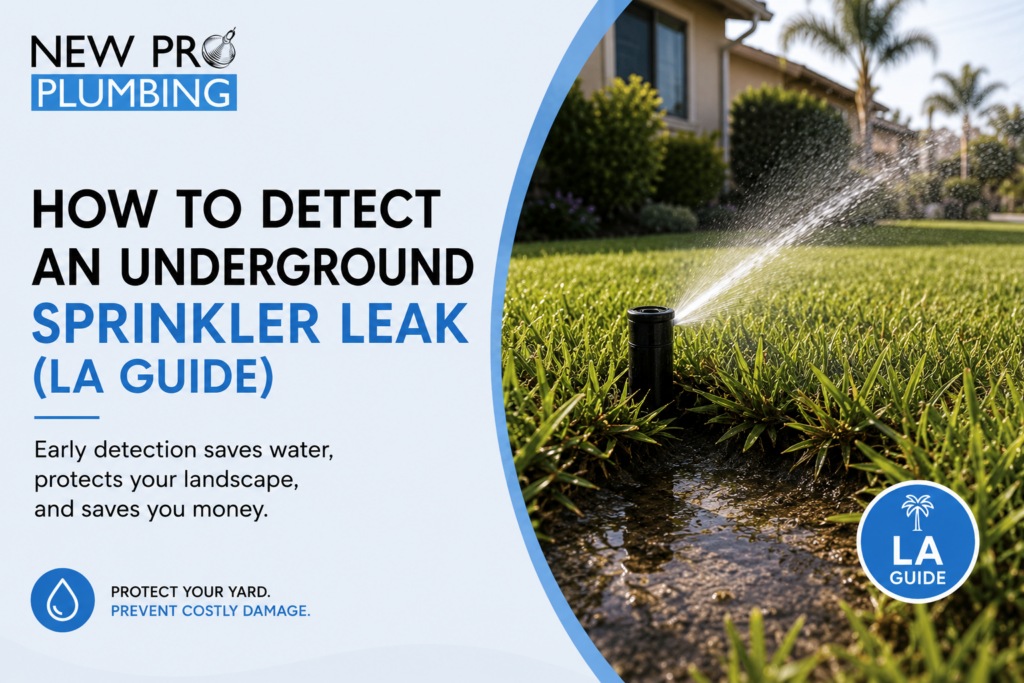






Your water bill is up $80 this month and you have not changed anything. The lawn looks fine. There are no obvious leaks inside the house. Most homeowners in this situation eventually discover the same culprit: an underground sprinkler line that has cracked and is quietly dumping hundreds of gallons of water into the soil every day. Underground irrigation leaks are one of the most expensive and least visible plumbing failures, especially in older Los Angeles neighborhoods where PVC and polyethylene irrigation pipe is reaching the end of its lifespan. Here is how to find a leak before your water bill makes the decision for you.
Why Underground Sprinkler Leaks Are Easy to Miss
Surface sprinkler problems announce themselves: a broken head spraying sideways, a geyser in the lawn, water running down the sidewalk. Underground leaks are different. Water escapes into the soil and either soaks in (if the leak is small) or surfaces some distance from the actual break (if the leak is larger and the soil is saturated).
The result is that homeowners often notice the symptoms (high water bill, soft soil, depressed grass) weeks or months before identifying the cause. By that point, hundreds of dollars in water has already been wasted, and in some cases the leak has undermined nearby hardscape or eroded soil under a walkway.
Common Signs of an Underground Sprinkler Leak
Unexplained Spike in Water Bill
The clearest signal. The U.S. Environmental Protection Agency estimates that household leaks waste nearly 1 trillion gallons of water nationally each year, and underground irrigation leaks are one of the largest single contributors. If your bill has climbed by $30 or more with no change in usage habits, a leak is the most likely cause.
Soft, Soggy, or Wet Spots in the Lawn
A leak below grade saturates the soil locally. Walking on the area feels noticeably softer than the surrounding lawn, and the grass may be unusually green or growing faster than the rest of the yard.
A Sprinkler Zone That Runs Without Trying
When the irrigation controller is off but you still hear a faint hissing near a valve box or you see moisture forming in the box itself, you have a valve that is not sealing completely. Water is continuously flowing into one zone and out through the heads or any breaks in the line.
Reduced Pressure on One Zone
If a single zone produces noticeably weaker spray than the others, the cause is often a leak somewhere along that zone’s lateral line. Water is escaping before it reaches the heads, so the heads receive reduced pressure and flow.
Sinkholes or Depressions in the Lawn
Severe long-running leaks erode soil and create small depressions or full sinkholes. This is a late-stage sign and indicates the leak has been active for a while.
Mushroom Growth or Mold in Unusual Spots
Persistent ground moisture from an underground leak supports fungal growth in areas where it normally would not appear. If you suddenly have mushrooms in a section of lawn that has always been dry, check for a leak.
Mineral Stains or Algae on Hardscape
Water seeping under a walkway, patio, or driveway can produce white mineral stains or green algae on the surface. This usually means the leak has been ongoing for weeks or months.
A Step-by-Step Diagnostic Method
Working through these steps in order narrows down where the leak is:
1. Check Your Water Meter
Turn off every water-using appliance and fixture in the house. Look at the water meter. If the dial is still moving, water is flowing somewhere on the property. If you have a sprinkler shutoff valve, turn it off and look again. If the meter stops moving when the sprinklers are off, the leak is in the irrigation system.
2. Run Each Zone Individually
Turn on each zone one at a time and walk the entire run while it operates. Look for:
- Unusually wet or muddy areas that should not be wet (between heads, near valves, along the line)
- Heads with noticeably weaker spray than they should have
- Water surfacing where there is no head
- Hissing sounds from valve boxes when the zone is off
This narrows the leak down to a specific zone.
3. Inspect the Valve Boxes
Most irrigation systems have valve boxes flush with the soil near the property line or along the perimeter. Open each box and check for standing water, soft soil at the bottom, or visible leaks at valve connections. Failed valve diaphragms are a common leak source and are usually fixable without major excavation.
4. Walk the Lateral Lines
Within the identified zone, walk the lateral lines (the underground pipes running from the valve to the sprinkler heads) and feel for soft soil with your foot. Push a screwdriver into suspect areas and check whether water is present below the surface. The leak is usually within a few feet of the wettest spot.
5. Check the Backflow Preventer
The backflow preventer is the brass assembly typically located near the property line where the irrigation system ties into the main water supply. If it is leaking from any of its connections or from the relief valve, water is being wasted continuously even when no zones are running. The Los Angeles Department of Water and Power requires annual testing of backflow preventers on residential irrigation systems, and a failing assembly is one of the more common causes of unexplained water bills.
6. Use a Pressure Test
If you have walked the system and cannot find the leak visually, a licensed plumber can pressure-test individual zones to isolate the leak point. Pressure-testing pressurizes the system and watches for pressure drop, which pinpoints the affected zone or line section.
7. Call in Electronic Leak Detection
For leaks that are hidden under hardscape or deep below grade, electronic leak detection uses acoustic equipment to listen for the sound of escaping water through the soil. This is what we use for stubborn leaks and is often the fastest path to locating the exact failure point.
When the Leak Is on the Supply Side
Sometimes the leak is not in the irrigation system itself but in the main water line feeding the home or in the line between the meter and the irrigation tie-in. The water meter test in step 1 identifies this: if the meter keeps moving even when the sprinkler shutoff is closed, the leak is upstream of the irrigation. This is a different repair scope, and you can read more about it on our water line repair and replacement page.
Common Causes of Underground Sprinkler Leaks in LA
The reasons irrigation lines fail in Los Angeles are predictable:
Aging PVC pipe that has become brittle over decades and cracks under soil pressure or seasonal temperature changes.
Polybutylene pipe (used on some properties in the 1980s and 1990s) that has a known failure rate and often needs replacement when it starts leaking.
Root intrusion from mature trees pushing against shallow buried lines and eventually crushing them.
Soil movement from earthquakes, ground settling, or heavy equipment driving over the lawn.
Improper installation with insufficient bedding sand, lines too shallow, or poorly glued joints that fail under pressure.
Mowing or landscaping damage where a sprinkler head was hit and the impact transferred to the lateral line below.
DIY vs Professional Repair
Some sprinkler issues are reasonable DIY projects: replacing a broken head, swapping a failed valve diaphragm, or repairing a clearly visible cracked pipe a few inches below the surface. But underground leaks where the location is uncertain, leaks under hardscape, leaks involving the supply line or backflow preventer, and any issue requiring permits are jobs for a licensed plumber.
Our irrigation repair page covers what we handle and the full diagnostic process.
How Much Will the Repair Cost?
Once the leak is located, repair costs in Los Angeles are generally:
- Replacing a leaking valve: $150 to $400
- Repairing a single underground pipe break: $250 to $750
- Replacing a section of lateral line: $400 to $1,200
- Backflow preventer repair or replacement: $250 to $850
- Full zone replacement: $800 to $2,500
If you find yourself doing multiple repairs in the same year, see our breakdown on sprinkler system repair vs replacement for guidance on when full replacement makes more sense.
Preventing Future Leaks
A few practices reduce the risk of future underground leaks:
- Check the water meter quarterly to catch new leaks early
- Walk the system every 6 months to look for soft soil or weak zones
- Schedule annual backflow preventer testing
- Avoid driving heavy equipment or vehicles over sprinkler line routes
- Replace aging polybutylene pipe proactively rather than waiting for it to fail
- Use pressure-regulated heads to reduce stress on the lateral lines
Frequently Asked Questions
How much water can an underground sprinkler leak waste?
A pinhole leak can waste 500 gallons per day. A significant break can waste 5,000 gallons or more per day. On Los Angeles water rates, that translates to $50 to $300 added to your monthly bill.
Can I find the leak myself?
For surface-level symptoms (soft spots, weak zones, visible damage), yes. For deeper or hidden leaks, electronic leak detection equipment is usually faster and more reliable than guessing.
Will my homeowner’s insurance cover the leak?
Most policies do not cover gradual leaks or the repair of buried irrigation lines, but some cover collateral damage if the leak undermined a walkway or damaged structures.
How quickly should I act on a suspected leak?
Promptly. Every day of a significant underground leak wastes water and money, and longer-running leaks can cause secondary damage to landscaping and hardscape that adds to the total cost.
Can a plumber find the leak without digging?
Yes, in most cases. Electronic acoustic leak detection and pressure-testing locate the leak before any excavation is needed.
Schedule Leak Detection
If you suspect an underground sprinkler leak and the basic diagnostics have not pinpointed it, contact New Pro Plumbing for professional leak detection and repair anywhere in Los Angeles. We will find the leak, give you a written estimate, and fix it the same day in most cases.