


If you have just been told your sewer line needs work, the first question on your mind is probably what it is going to cost. Sewer repair pricing in Los Angeles varies more than almost any other plumbing job because the work depends on factors you cannot see from the surface: pipe material, depth, length, access, and what is sitting on top of the line. This guide breaks down the actual price ranges Los Angeles homeowners are paying in 2026 and explains what drives the cost up or down.
Typical Sewer Line Repair Cost Ranges in Los Angeles
Most homeowners can expect to fall into one of these buckets:
Spot repair or section replacement: $1,800 to $4,500. This is the right approach when a camera inspection shows a single failure point, like a cracked joint or a localized collapse, and the rest of the line is structurally sound.
Hydro jetting and root removal: $375 to $850. When the pipe is intact but full of root intrusion, grease, or scale, high-pressure water clears it without any excavation.
Trenchless pipe lining: $90 to $250 per linear foot. A typical residential sewer lateral in Los Angeles runs 50 to 75 feet from the foundation to the city tap, so most full liner jobs come in between $5,000 and $18,000.
Pipe bursting: $90 to $250 per linear foot, similar to lining but used when the existing pipe is too damaged to line.
Full traditional excavation and replacement: $5,000 to $25,000 or more. The wide range reflects how much restoration is needed afterward, which can easily double the base cost on properties with mature landscaping or hardscape.
What Drives Sewer Repair Cost Up or Down
Length of the Line
The lateral that runs from your home to the city sewer connection is the part you are responsible for as a homeowner. In older Los Angeles neighborhoods like Mar Vista, Cheviot Hills, and Palms, lots are typically 50 to 80 feet deep, which means the lateral runs 50 to 75 feet on average. Larger lots in Pacific Palisades or properties set far back from the street can run well over 100 feet, increasing the cost proportionally.
Depth of the Pipe
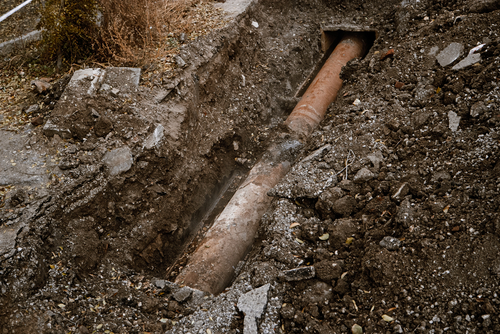
Sewer laterals in flat parts of LA typically sit four to six feet below grade. In hillside neighborhoods or homes with basements, the line can run eight to twelve feet deep, which significantly increases excavation labor and shoring requirements. Deeper lines also raise the cost of trenchless work because access pits have to be dug deeper.
Pipe Material
What you have now affects what you can do. Clay pipe lines well. Cast iron lines well after cleaning. Orangeburg pipe almost always needs full replacement because the material has lost structural integrity. PVC and ABS lines that have failed are usually cheaper to repair because the failure is typically isolated.
Access
A sewer running under a paved driveway, swimming pool deck, or detached garage costs more to repair traditionally than one running under an open lawn, simply because of what has to be torn out and rebuilt. This is where trenchless options often pay for themselves: the price of the trenchless job may be higher than a basic dig, but the savings on hardscape restoration tip the math.
Permits and Inspections
Sewer work in Los Angeles requires permits through the Los Angeles Department of Building and Safety, and connections to the city sewer require coordination with the Bureau of Sanitation. Expect $150 to $600 in permit and inspection fees on most jobs. Permitted work is not optional. It is what protects you when you sell the home and what the Federal Trade Commission recommends documenting on any major home repair.
Restoration Costs
The price most homeowners overlook is what happens after the pipe is fixed. Replacing a 75-foot sewer line under a mature front yard can mean $3,000 to $10,000 in landscape restoration, $2,000 to $8,000 in driveway or sidewalk repair, and additional cost if the line runs under a patio or pool deck. This is why trenchless options often make financial sense even when their per-foot cost looks higher.
Spot Repair vs Full Replacement: Which Do You Actually Need?
This is where a sewer camera inspection is essential. Without video confirmation, no honest plumber can tell you whether you need spot repair, lining, or full replacement. The camera shows whether the failure is isolated or systemic, what the rest of the pipe looks like, and what the realistic service life is for what is left.
If a contractor quotes you a full replacement without doing a camera inspection first, get a second opinion. The difference between a $3,500 spot repair and a $20,000 full replacement is not something you want decided by guesswork.
Trenchless vs Traditional: The Cost Math
For most Los Angeles properties, trenchless lining or pipe bursting comes out cheaper once you factor in restoration. A full traditional dig job that costs $12,000 in pipe and labor can easily add $8,000 in landscape and hardscape restoration, bringing the total to $20,000. The same job with trenchless lining might run $14,000 all in, with no restoration needed.
That said, trenchless is not always an option. Bellies in the line, completely collapsed sections, and lines with multiple bad transitions sometimes require traditional excavation. We covered the full breakdown on our sewer line repair and replacement page.
Will Insurance Cover Sewer Line Repair?
Standard homeowners insurance in California generally does not cover sewer line failure from gradual deterioration, which is how most failures happen. Some policies cover damage caused by the failure (like sewage backing up into the home) but not the line itself. Service line coverage is sometimes available as a rider through your existing carrier and runs $40 to $100 per year, which is worth considering if your line is older.
The California Department of Insurance publishes consumer guides on what residential policies typically cover.
Financing and Payment Options
Most reputable Los Angeles plumbers offer financing on larger jobs, with monthly payments ranging from $150 to $400 depending on the total cost and term. We offer financing on jobs over $2,500 with approved credit. The U.S. Environmental Protection Agency publishes guidance on residential wastewater system maintenance worth reviewing if you are weighing the timing of a major repair.
Frequently Asked Questions
What is the cheapest sewer line repair option?
Hydro jetting at $375 to $850 is the lowest-cost option, but it only works when the pipe itself is structurally sound. If the camera shows cracks, breaks, or collapsed sections, jetting alone will not solve the problem long term.
Why is my sewer repair quote higher than my neighbor’s?
The variables are length, depth, pipe material, access, what is on top of the line, and whether the failure is isolated or systemic. Two homes on the same block can have very different repair costs based on these factors.
Is it cheaper to repair or replace a sewer line?
If the failure is isolated, repair is dramatically cheaper. If the line has multiple failures, severe bellies, or a material that cannot be salvaged (like Orangeburg), full replacement is usually the better long-term value because you avoid repeat repairs.
How long does a properly repaired sewer line last?
A modern PVC or HDPE line installed correctly should last 50 to 100 years. Trenchless cured-in-place liners are rated for 50 years. Spot repairs on aging clay or cast iron lines may buy you 5 to 20 more years, depending on the rest of the line’s condition.
Get an Honest Quote on Your Sewer Repair
The only way to know what your specific repair will cost is to start with a camera inspection and a proper diagnosis. Contact New Pro Plumbing for a sewer camera inspection and a written, upfront quote anywhere in Los Angeles.