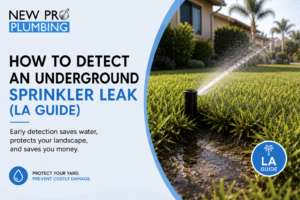
Watching water bubble up through your lawn or seeing entire zones fail to come on is frustrating, and the question that follows is always the same: do I keep fixing this thing, or just replace the whole system? In Los Angeles, where many irrigation systems are 20 to 40 years old and water rates keep climbing, the decision is more financially loaded than most homeowners realize. Here is how to think about it.
When Repair Is the Right Call
Most sprinkler problems are isolated failures that do not justify replacing a working system. Repair makes sense when:
The system is less than 15 years old and most of the components are still functioning. A few broken heads, a failed valve, or a single underground leak does not mean the whole system has reached end of life.
The failure is localized to a specific zone, valve, or run of pipe. If 80 percent of the system works correctly and one zone has issues, fixing that zone is dramatically cheaper than replacement.
The controller and valve manifold are in good shape. These are the most expensive components to replace. If they are still working, repairing the rest of the system is usually worth it.
The pipe material is still serviceable. PVC and polyethylene irrigation pipe lasts 25 to 50 years when installed correctly. If the pipe itself is sound, repairing leak points and replacing failed components is the smart play.
For most repair scenarios, our irrigation repair page covers the full scope of what we handle.
When Replacement Is the Right Call
Replacement starts to make sense when the cumulative cost of ongoing repairs catches up to or exceeds the cost of a new system. Specifically:
The system is more than 25 years old and you are seeing failures in multiple components: pipes, valves, heads, and the controller. At this point, you are essentially replacing the system one piece at a time, and the math favors doing it all at once.
The pipe is failing in multiple locations. If you have repaired three different leak points in two years, the next leak is already on its way. Replacing the lateral lines is cheaper than continuing to dig up new spots every six months.
The system is poorly designed for the current landscape. Yards change over time. Trees mature, lawn areas shrink, drought-tolerant plantings replace turf. An old system designed for a different yard often wastes water on areas that no longer need it.
You want significant water savings. Modern smart controllers, drip conversion, and pressure-regulated heads can cut irrigation water use by 30 to 50 percent compared to a 20-year-old system. The U.S. Environmental Protection Agency publishes guidance through its WaterSense program on irrigation efficiency that explains the savings potential.
The system uses outdated materials. Galvanized steel irrigation pipe (still found on some older LA properties) corrodes from the inside and is not worth repairing past a certain point. Same with old polybutylene pipe, which has a known failure rate.
Cost Comparison
Typical repair costs in Los Angeles:
- Single sprinkler head replacement: $25 to $75 per head
- Valve replacement: $150 to $400 per valve
- Underground line repair (single point): $250 to $750
- Backflow preventer repair or replacement: $250 to $850
- Controller replacement: $250 to $700
Typical replacement costs in Los Angeles:
- Partial replacement (one or two zones): $1,500 to $5,000
- Full system replacement (small to medium yard): $4,000 to $9,000
- Full system replacement (large yard): $8,000 to $20,000+
- Smart controller upgrade only: $400 to $1,200 installed
The break-even math depends on your specific yard size and how many repairs you are doing per year. A useful rule of thumb: if you are spending more than $1,500 a year on irrigation repairs, replacement starts to look attractive.
Water Efficiency: The Hidden Variable
In Los Angeles, water rates have climbed steadily over the last decade, and modern irrigation systems use significantly less water than older ones. A 30 percent reduction in irrigation water use on a typical Westside property can save $400 to $1,200 per year on the water bill alone, which changes the replacement math.
The savings come from a few sources: smart controllers that adjust to weather and soil conditions, drip irrigation in planted beds that delivers water directly to root zones, pressure-regulated rotor heads that produce more uniform coverage, and rain shut-off sensors that prevent watering during storms.
The Los Angeles Department of Water and Power offers rebates on qualifying smart controllers, drip conversion, and high-efficiency sprinkler heads, which can offset 10 to 30 percent of replacement costs depending on the program and timing.
Permits and Code
Most repairs do not require permits. Full system replacements that involve modifying the supply line tying into the home, relocating the backflow preventer, or installing a new system on a previously unirrigated property may require permits through the Los Angeles Department of Building and Safety. A licensed plumber handles the permit process when needed.
Backflow Preventer Considerations
Los Angeles requires functional backflow prevention on every irrigation system tied to potable water, with annual testing. If your backflow preventer has failed multiple tests or is badly corroded, replacing it is non-negotiable, and that cost ($250 to $850) factors into the repair-versus-replace decision.
When Partial Replacement Makes Sense
A middle path is replacing the worst-performing zones while keeping the rest of the system. This works well when:
- The controller and main valve manifold are still in good shape
- One or two zones have failed but the others are working correctly
- The pipe material in the failing zones has reached end of life but the rest of the system is younger
- Budget is a factor and full replacement is not feasible right now
A licensed plumber can map the system, identify which zones are worth saving, and replace only what needs replacing.
Frequently Asked Questions
How long should an irrigation system last in Los Angeles?
A well-installed system should last 25 to 40 years, with components like heads and valves needing periodic replacement throughout that time. Pipes, manifolds, and controllers typically last the longest.
Can I replace just the controller without replacing the whole system?
Yes, and it is one of the highest-value upgrades you can make. A modern smart controller paired with an existing functional system can cut water use 20 to 30 percent on its own.
Is drip irrigation worth converting to?
For planted beds, yes. Drip is dramatically more efficient than overhead spray for shrubs, trees, and gardens. For lawn areas, conventional sprinkler heads are still the right choice.
Do plumbers fix sprinkler systems, or do I need a landscaper?
A licensed plumber is the right call when the issue involves the supply line, backflow preventer, underground pipe failures, or anything requiring permits. Landscapers can handle surface-level head replacement and adjustment.
Can the system be repaired in winter?
Yes. Los Angeles winters do not freeze sprinkler systems, so repairs can be done year-round. Some homeowners prefer to schedule major work during the rainy season when irrigation use is naturally lower.
Get an Honest Assessment
Whether your system needs targeted repairs or full replacement, the right first step is a professional assessment. Contact New Pro Plumbing for an irrigation evaluation anywhere in Los Angeles. We will tell you straight whether repair or replacement makes more sense for your specific situation.